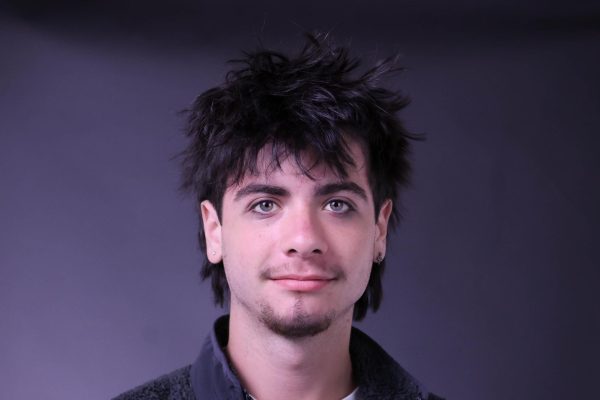


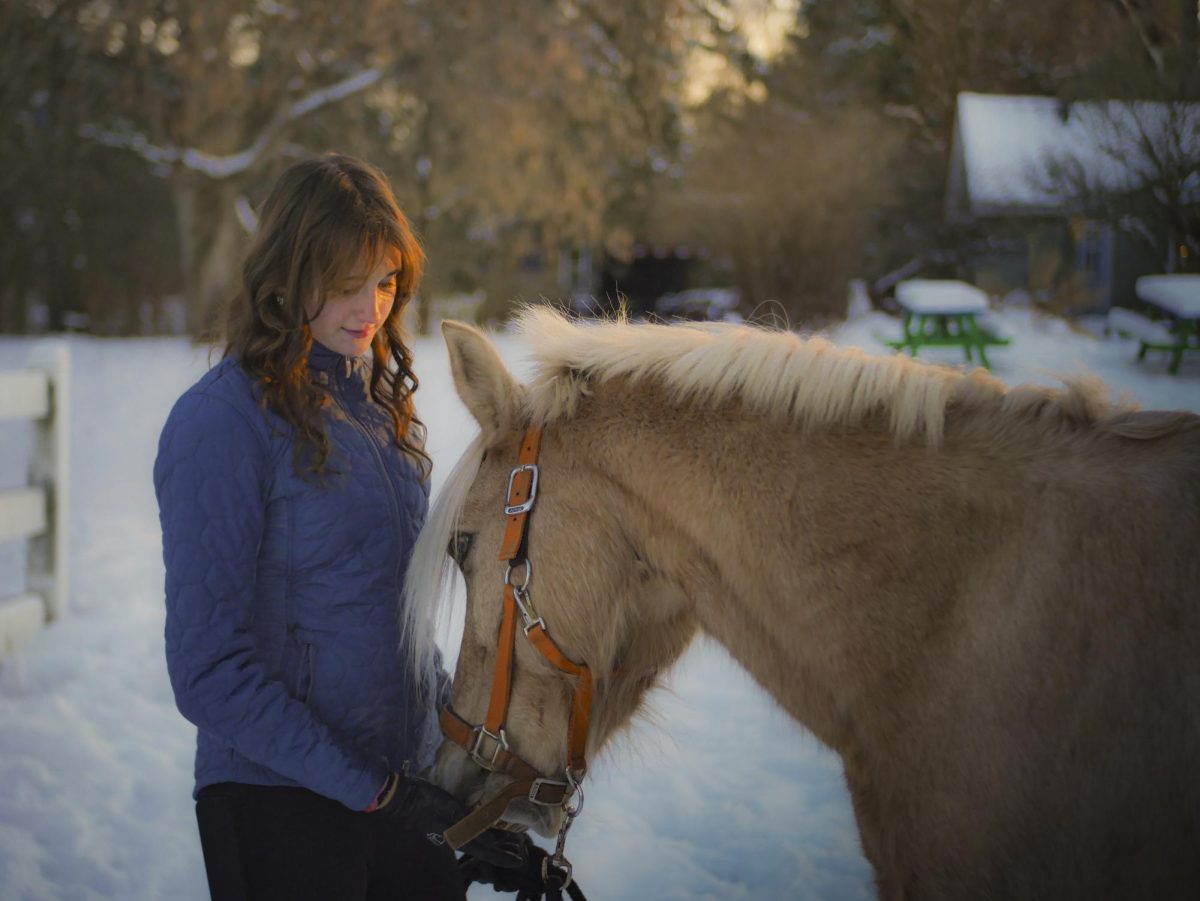
Nina Sundermann (11) dodges turkeys and deer as she drives up the long, snow-covered road towards Nottingham Equestrian Center. Although located in the middle of East Lansing, the nearby chaos of town is hidden out of sight. The area’s surrounding forest creates a quiet atmosphere, broken only by the occasional cry of a donkey and stirring of horses.
She’s in her own secluded world.
When she arrives, she tends to her duties: finding and feeding the five barn cats, refilling water, grooming the horses and mixing them cocktails of various supplements and feed to satisfy their complex diets.
“Sometimes you need to put hay in their food so they eat slower, and some of them get anxiety from being in their stalls, so you need to put toys and things in there to keep them entertained,” Sundermann said.
When she’s done with her tasks, she can finally do what she came for: riding.
The summer Sundermann was 6, her parents signed her up for horse camp to get her out of the house. But what started as a fun weeklong activity to occupy her became a lifelong passion.
“I realized it was one of the only things that could calm me down after something happened and take my mind off things,” Sundermann said. “It gave me a really good sense of what I wanted to do with my future.”
Sundermann plans to attend Michigan State University to get a business degree, and from there, she hopes to open her own barn one day. But considering the substantial role horses play in her life, she doesn’t talk about it much. Not because she doesn’t want to, but because she feels her peers wouldn’t find it interesting.
“I don’t talk about it a lot because a lot of people have made fun of me for it in the past,” Sundermann said. “It’s usually seen as stupid.”
But the judgment doesn’t stop her from doing what she loves. For Sundermann, horseback riding provides her an outlet that can’t be found anywhere else.
“You have this relationship with an animal beyond just talking,” Sundermann said. “When you ride, you’re having this conversation back and forth about what you’re going to do and how you’re going to get it done. It’s really therapeutic to be able to communicate with an animal like that.”
Sundermann has been riding and leasing her horse, Cruiser, for the last four years. She chose him because he was always the horse no one wanted to ride.
“He was so bad he couldn’t even stay on the track of the arena,” Sundermann said. “He never really had any talents.”
But Cruiser’s imperfections only make her love him more.
“He has such a great personality and is always doing something funny,” Sundermann said. “He’s super smart, but just never had the chance to show it. He’s an amazing jumping horse, and the reason I have good balance and patience. He teaches me something new every day.”
While the lack of communication is part of what Sundermann loves about riding, it also causes frustration.
‘There’s that barrier where you can’t tell them what you want them to do,” Sundermann said. “It’s hard for you mentally, but also for them. Horses get upset, kind of like people do. They feel sad because they can’t understand what you’re asking them to do. And sometimes your horse can get so frustrated, they throw you off. You can get really hurt.”
But looking back at her years of riding, the times filled with the most frustration also came with the most reward—and ultimately remind her why she loves the sport and wants to continue riding.
“There are these moments where you and your horse finally understand something, and after struggling with it for so long, you both get it at the same time,” Sundermann said. “I remember it was so satisfying making those accomplishments, and I wanted to keep making them. It’s my passion.”