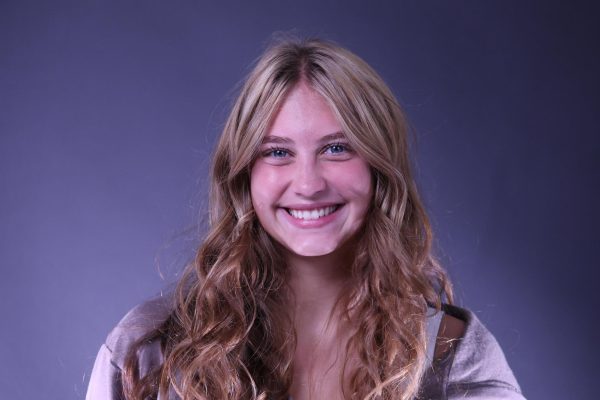



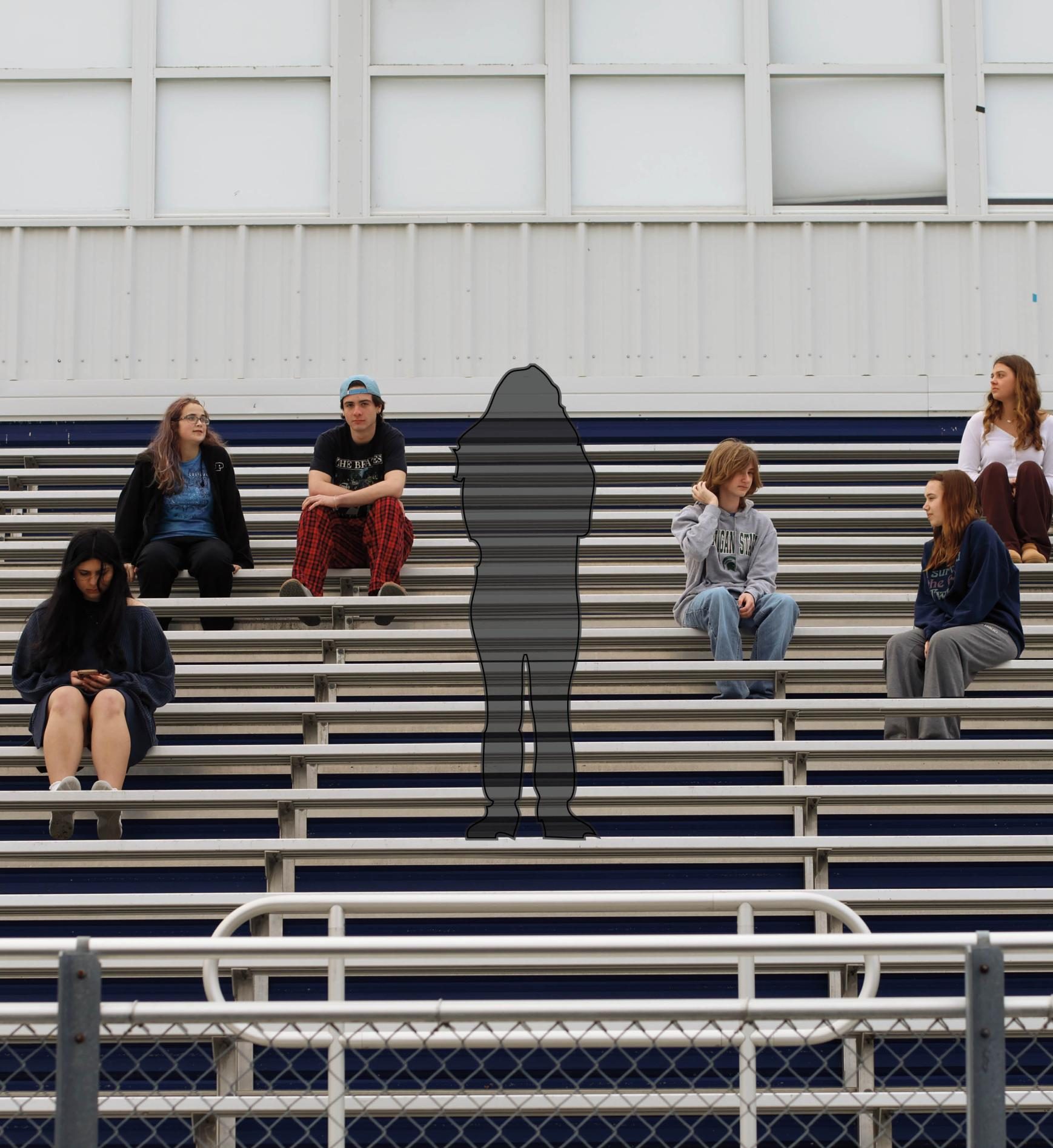
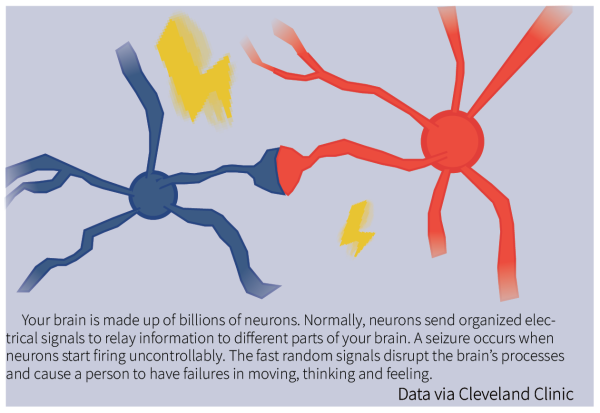
In eighth grade, Halle Brown (11) was sitting in math class when suddenly, everything stopped. Her eyes were open, but she couldn’t see. She had just been listening, but she couldn’t hear. All her senses had left her.
Unable to speak or move, she sat paralyzed while the class continued as if nothing was happening. After 10 seconds, she jumped back to reality.
“It felt like when you zone out in class and then suddenly refocus,” Brown said. “I wasn’t afraid, I just was like, okay, this is different. It stopped, so I didn’t worry about it and went back to paying attention in class.”
(Courtesy Photo)
But the next day, at the same time, it happened again. And again. And again.
Soon Brown decided to mention it to her mom. Concerned, her mom called her friend, a nurse, to ask for advice.
“She said it sounded like absent seizures,” Brown said. “We ended up going to the hospital that day.”
At first, they went to a hospital in Lansing, but were told that there wasn’t much that could be done immediately. The earliest Brown could get an MRI was a month out.
But while she waited for her MRI, her condition grew severe.
“I started to have seizures three times during the day, and around five times at night,” Brown said. “I couldn’t sleep or focus in class, so I started to miss school.”
Eventually, the MRI couldn’t wait. Brown was taken to the University of Michigan Hospital in Ann Arbor.
“I was able to get testing done in the ER there, and the next day they told me I had epilepsy,” Brown said.
After she was diagnosed, Brown took a break from school to find an effective treatment plan for her epilepsy. She began taking anti-seizure medication. But it didn’t help for long.
“The first medication worked for about a month, and then I started having seizures again,” Brown said. “The second medication I tried did nothing. It actually made me break out in hives.”
By the time she started her third medication, Brown was running out of options. If they couldn’t find one that worked, she would need brain surgery.
“Luckily, the third one worked pretty much immediately,” Brown said. “I’ve been seizure-free for two years now.”
With her life back on track, Brown gradually returned to school and finished the remainder of eighth grade with her friends.
But that summer, only months after her epilepsy had stabilized, the sense of normalcy she fought to reclaim would slip through her fingers once more.
The day it started, she dismissed it as cramps. She already had one health crisis–what were the odds of having another all before the age of 15?
She lay in bed all day, sleeping to ignore the sharp aches in her stomach. By morning, it would all be better.
But it wasn’t.
Within days, the pain had grown so severe that Brown struggled to sleep and walk.
“There were times my dad had to carry me to my bed because moving hurt so bad,” Brown said. “We didn’t wait more than a week before going to the ER because it was so extreme.”
It took three different hospital trips and six months before Brown was able to get a diagnosis.
“At first I went to McLaren, and they told me I was just constipated,” Brown said. “Then I went to Sparrow, and their GI doctor was on vacation for a whole month, so I had to go to Ann Arbor again.”
After extensive testing, including an MRI and ultrasound, she was finally diagnosed with ulcerative colitis in January 2024.
Ulcerative colitis is a chronic inflammatory disease that affects the bowel. The immune system attacks the lining of the large intestine, causing open sores, internal bleeding and swelling. Any food that passes through the damaged bowel triggers further irritation and severe pain.
“It was like I had to start all over again,” Brown said. “I was finally back to normal and could do what I wanted, and then I was back to being in the hospital a lot, not seeing my friends and missing school.”
In an attempt to hold on to normalcy, Brown attended school as much as possible her freshman year. But her condition persisted through the summer and into her sophomore year. About a month into her sophomore year, Brown knew her body couldn’t handle it anymore.
“It was too hard to balance both,” Brown said. “I had to go online for the rest of the year.”
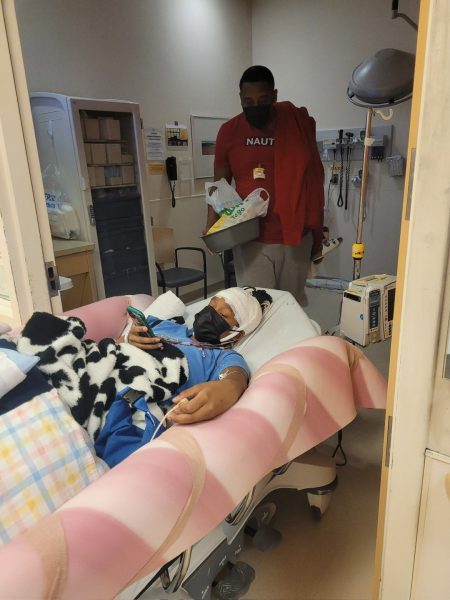
But withdrawing from school was far from easy. While her friends stood smiling with painted faces in the stands of a football game, Brown sat alone in a hospital bed.
She watched as they carpooled to volleyball practice, complained about schoolwork and laughed together at sleepovers.
“It felt like I was missing out on a whole year of my teenage life,” Brown said.
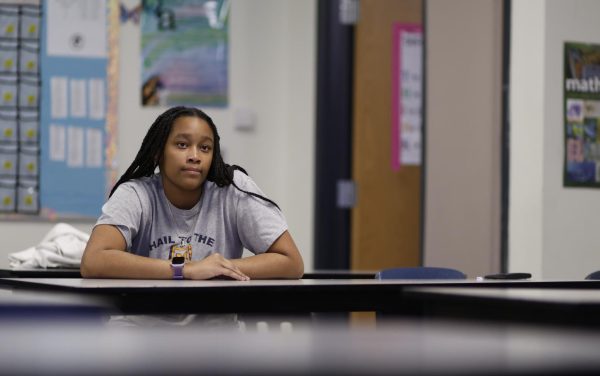
Putting her life on pause was hard, but it proved to be the right decision. Stepping away from school gave her the much-needed time to heal.
After her diagnosis, the road to recovery was long. Brown initially started a medication called Inflectra, which required her to go to the hospital every week for infusions.
“That medication worked for a while, but then it wasn’t working as well,” Brown said. “So I started Solara, which is an injection I get at home every month.”
After two months of taking Solara, Brown started to notice a difference. Slowly, her condition began to improve. The pain she had been experiencing for the last two years became less constant, and by the end of her sophomore year, her flare-ups steadied.
“It started to really get better this past summer,” Brown said. “I finally got my life back and was able to be a normal person again.”
Brown was able to return to school this year as a junior. She’s back to making weekend plans, playing volleyball and walking the halls with her friends.
But fear is bound to linger—after countless trips to the ER and multiple life-altering diagnoses in under a year— she knows how quickly life can change. However, she also knows not to dwell on what could go wrong.
“It’s important to know that it will get better and you will find a way to live your life to the fullest,” Brown said.
For three years after the diagnosis, they were painfully aware of just how alone they were.
A Google search gave clarity to the root of a frustrating learning disability they simply believed to be a form of dyslexia.
An uncomplicated blood draw made clear that the anger overbearing their once happy household was more than just typical preteen behavior.
It was clear that they were just one sliver of an already tiny statistic: one in 32,000, to be exact. Small enough to feel like they would be the only ones they could relate to at the end of the day.
They never really expected to come across someone who was also in their shoes—or maybe, their cleats.
But a hot summer’s day last July on Dewitt’s Miracle Field baseball diamond changed all that.
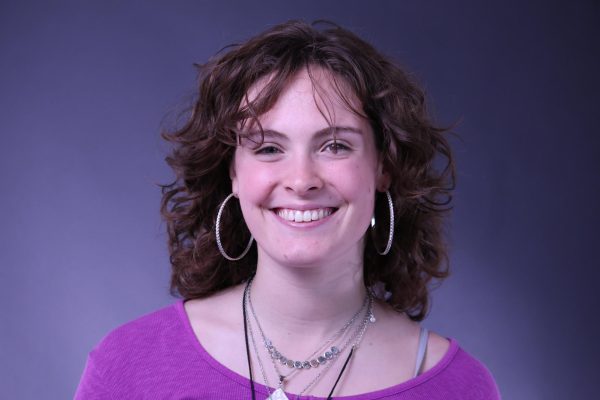
It was a special game for Corissa Pittman (11) and Chloe Pittman’s (10) baseball team, the Rockies, a group just for people with disabilities. Every player was asked to share a fact about themselves that was read out to the crowd before they took to the batter’s box.
“I love soccer.”
“My favorite subject is math.”
“I have a rare genetic condition called Kabuki syndrome.”
After taking their turn at bat, Corissa headed back to their dugout, spotted with purple-clad players—one being a 6-year-old little girl. That young child squeezed their way through the space to Corissa, baseball glove in hand, and spoke five simple words:
“I have Kabuki syndrome too.”
In the time it took to get a swig of water, over a 1000 days of loneliness fell away.
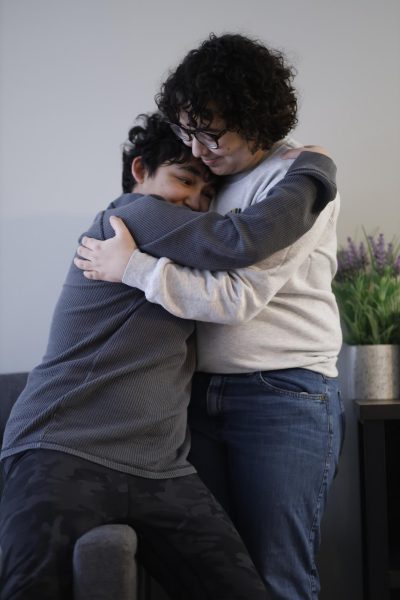
“[That moment] made me feel I could talk about the things that I have gone through and someone would get it,” Corissa said. “It felt like a weight was lifted off my shoulders.”
According to the National Organization for Rare Disorders, Kabuki syndrome “is a rare, multisystem disorder characterized by multiple abnormalities including distinctive facial features, growth delays, varying degrees of intellectual disability, skeletal abnormalities and short stature.”
When the Pittman twins were around 2 years old, the family started to notice some developmental delays with Chloe. Concerned, they took her to get genetic testing.
They received no diagnosis. Little to their knowledge, the mutated gene that Chloe and Corissa had was just being discovered at the time of testing.
“We just didn’t know much,” Corissa said. “Everyone didn’t.”
It would be another 12 years until they received an answer. At this time, Chloe was starting to act angry and aggressive. She would bite and hit on a daily basis.
“She was a shell of herself,” Corissa said. “It was hard on our family to see this person who was the happiest kid ever turn into this angry person. We knew that something was wrong.”
So they went back to the drawing board. The family got another round of genetic testing done for Chloe.
That same year, while on vacation in Georgia, Chloe finally received her diagnosis. Soon after, Corissa and their mom began researching symptoms of the condition.
As they delved deeper into Google pages, it dawned on them: Corissa could have it too.
Four years prior, Corissa tested positive for dyslexia after they noticed some cognitive struggles solving math problems.
“We went into this diagnosis of dyslexia for a long time, thinking that’s all it was and nothing else would come out of it,” Corissa said.
But after doing further testing, it was confirmed that Corissa, too, had Kabuki syndrome. Without Chloe’s diagnosis, which also classified the pair as identical twins due to how rare it is, Corissa would have never known that they had a disability.
Though they share the same diagnosis, specifically the Type II variation, Corissa and Chloe fall on different sides of the spectrum.
“If you met me, you would never be able to tell that I have Kabuki syndrome unless I told you,” Corissa said. “With Chloe, you could tell that she has a disability.”
Chloe has an additional diagnosis of autism, which she received shortly after being diagnosed with Kabuki syndrome. For her, the combined conditions manifest most physically through various cognitive impairments and struggles with eating, in addition to learning disabilities. While Corissa has symptoms of “autistic-like behaviors,” they don’t share this further condition with their sibling.
“A lot of people think that I’m on the spectrum, but I’m not,” Corissa said. “I don’t think being autistic is a bad thing, so it’s never really bothered me that people think I’m autistic.”
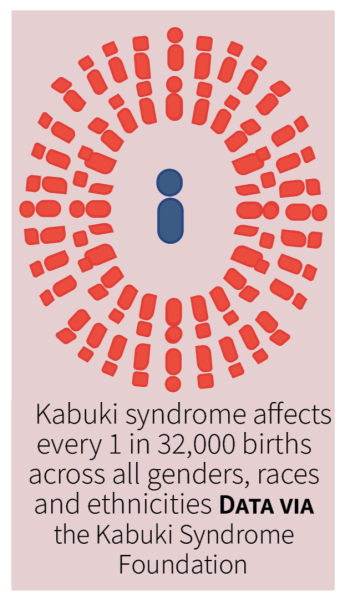
On top of this, Kabuki syndrome has onset sensory issues and learning disabilities for Corissa. However, the symptoms most prevalent for them are mental health related.
“I really struggled with suicidal thoughts,” Corissa said. “I felt so different from everybody else.”
While fighting this individual battle, Corissa faced outside stressors at school: bullying and nonstop judgment. During this time, they also came out as transgender—making the harassment from peers and strangers alike even worse.
“People would assume that I couldn’t make a decision about my own gender identity just because I’m disabled,” Corissa said. “People were skeptical that I understood what I was doing and that I couldn’t make that decision on my own, and that one day, I’ll probably be a girl again.”
As these obstacles continued to escalate, Corissa ended up at a psychiatric hospital. While their experience there wasn’t bad, they continued to feel a sense of misunderstanding. But this time, it was by the health professionals working there.
“They didn’t understand how to care for people with disabilities like mine,” Corissa said. “I felt like they didn’t understand how my brain worked.”
Now, Corissa works with a therapist and psychiatrist who consistently address their mental health concerns. They’ve also been able to find medication that helps them maintain stability.
To address the issue with bullying, Corissa discussed with their mom, therapist and psychiatrist to make the collective decision to switch from in-person to online school.
Through it all, one thing remained consistent: Corissa’s love for their sister.
“We have always been super close—closer than most twins,” Corissa said. “I wanted to protect her and make sure that she lives this happy life and has the same opportunities as everybody else.”
In their deep connection with Chloe, Corissa couldn’t help but notice the inherent inequities toward the disabled community the two were a part of.
They wouldn’t take that for an answer.
“When I got diagnosed, I was so sad,” Corissa said. “I didn’t know what my life would look like. I didn’t know what Chloe’s life would look like. I didn’t think that all the discrimination I was seeing for people with disabilities was fair.”
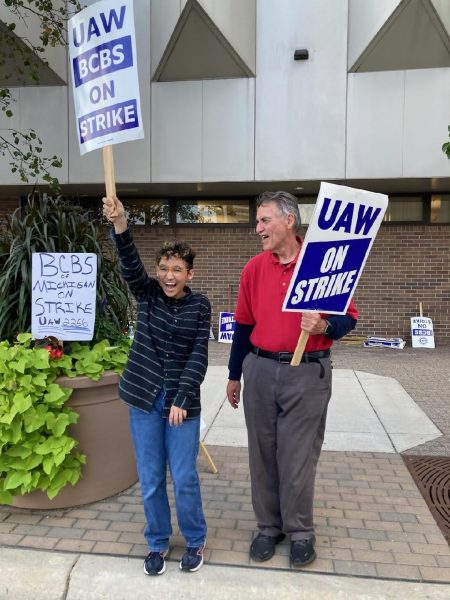
(Courtesy Photo)
At 14, shortly after being diagnosed, Corissa was made aware of a training opportunity through the Center on Youth Voice, Youth Choice, by a parent of a student in Chloe’s class. They dove headfirst into advocating for people like them.
“I [started doing advocacy] because I was thinking about Chloe,” Corissa said. “I don’t want Chloe to live a life where she can’t make decisions for herself.”
During this six-week session, Corissa virtually interacted with other activists across America, learned how to make presentations and pursued autonomy for people with disabilities—all as their youngest youth ambassador after applying.
“When you get diagnosed with something like Kabuki syndrome, you feel like your life as you know it is over and you won’t be able to do all these things,” Corissa said. “But then I got to meet all these people with disabilities who are parents, who work jobs and do all these amazing things. I was like, ‘I can do that too.’”
Since then, Corissa has spoken about disability rights at events from Traverse City to Denver. While they primarily focus on alternatives to guardianship for the disabled community, they also do sessions on mental health awareness and LGBTQ+ rights. No matter the location, their audiences often largely consist of other people with disabilities. In every presentation, they make an authentic testament to who they are.
“I’m showing that these people with disabilities can do anything they set their mind to, just like the people in my life who have disabilities who’ve shown me that I can do anything I set my mind to,” Corissa said. “No matter what anybody says, I’m going to be who I am.”