

When she went down, everyone thought that soccer player Emma Carter (9) was being dramatic. Just trying to get a penalty kick. As it turned out, this injury would cost Carter nearly a year of playing.
The game started out well. It was the spring of 2025 and a little cloudy at the East Lansing Soccer Complex as Carter’s mom, dad, and brother watched her play the sport that she loved. Carter wasn’t playing with her normal team, instead subbing for a team that needed more players. Despite this, she felt good about the game, knowing their opponent wasn’t very good.
However, she and her teammates ended up not playing as well as she’d expected. As Carter received the ball, they were tied 1-1. Planting her foot, she turned to shoot. That was when her leg gave out.
“I turned in, crumpled to the ground, and my knee felt like it completely gave [way],” Carter said.
Every cheer ceased as she fell to the ground, holding her leg and screaming in pain. Carter was helped off the field by the coaches.
After being rushed to Urgent Care, seeing an orthopedic doctor and waiting three days for MRI results, Carter learned that she had a dislocated kneecap. Sending her on her way with a brace and crutches, the doctors weren’t expecting the injury to come back so quickly.
However, Carter went on to dislocate her kneecap four more times from sports camps, soccer training and putting on pants. She needed Medial Patellofemoral Ligament Reconstruction, which forced her to miss the rest of track and soccer season. She won’t be cleared to play until February, so she’s missing soccer and basketball this year as well. Carter misses competing and seeing her teammates.
“I go to most of the home games, some of the practices,” Carter said. “It’s sad to watch them play while I can’t.”
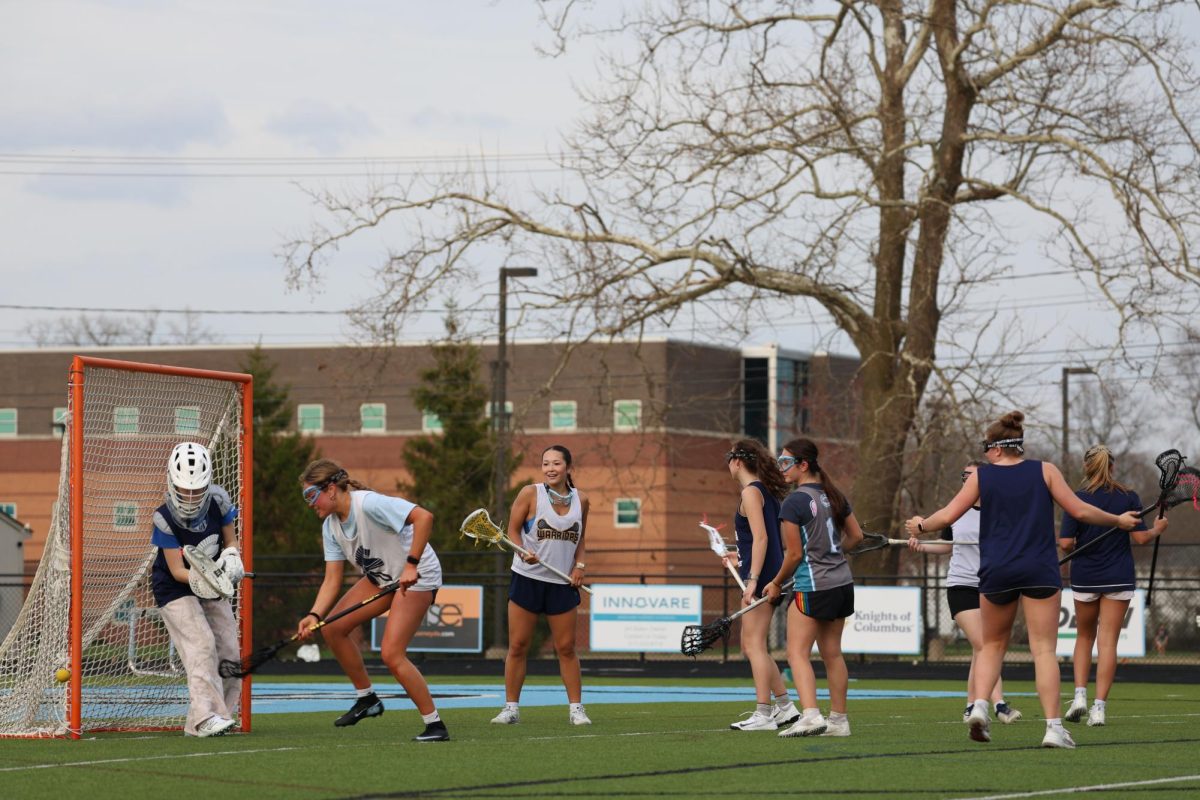
Sports injuries haunt many high school athletes everywhere, and for some, are simply unavoidable. Assistant football coach Gianni Feraco is no stranger to athlete injuries.
“It doesn’t scare me, but it’s part of the game,” Feraco said. “We know it’s uncontrollable, and we always pray that everybody plays their very best and nobody gets seriously hurt.”
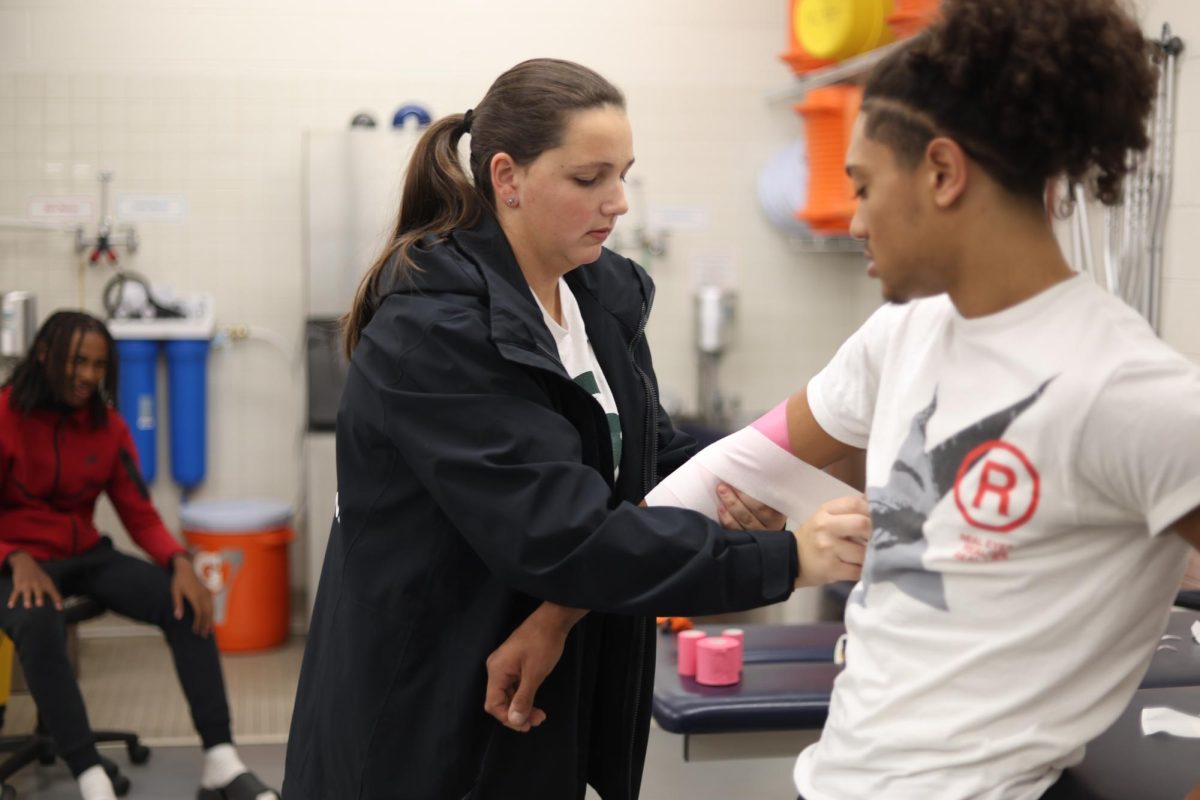
Every football game has athletic trainers and team doctors prepared to help whenever needed. Athletic trainer Hannah McConnell helps athletes by stabilizing injuries with athletic tape and giving athletes exercises and stretches to prevent future problems.
“Unfortunately, not everything is preventable,” McConnell said.
The coaches also do their part in helping to keep players safe.
“We have very, very nice equipment,” Feraco said. “[We also] make sure we’re coaching the proper techniques to our players.”
Football player Owen Sanford (12) has suffered injuries such as a broken hand, broken foot and a concussion. He was concussed at their very first game of the season this year.
“I felt like I was letting my team down [by] being injured and not being able to play,” Sanford said.
Most of what he missed was simply going to practice every day and being with his friends. However, Sanford feels that it gave him a new perspective on the sport.
“I got more of an appreciation of what I was missing,” Sanford said.
This feeling is mutual for volleyball player Peyton Ruttman (11), who sprained her ankle last spring.
“I took [volleyball] for granted at first, and then realized how important it is to me,” Ruttman said.
Staying home from practice was surpisingly difficult.
“It was definitely weird, because my whole afternoon was just fully opposite,” Ruttman said.
The injuries have given these athletes new views on their sports. After having to sit out of playing and miss seeing their friends, athletes like these won’t be complaining about practice anymore.
“It also gives you a chance to figure out what else you’re good at in life,” Carter said. “It’s actually a really good life lesson.”