

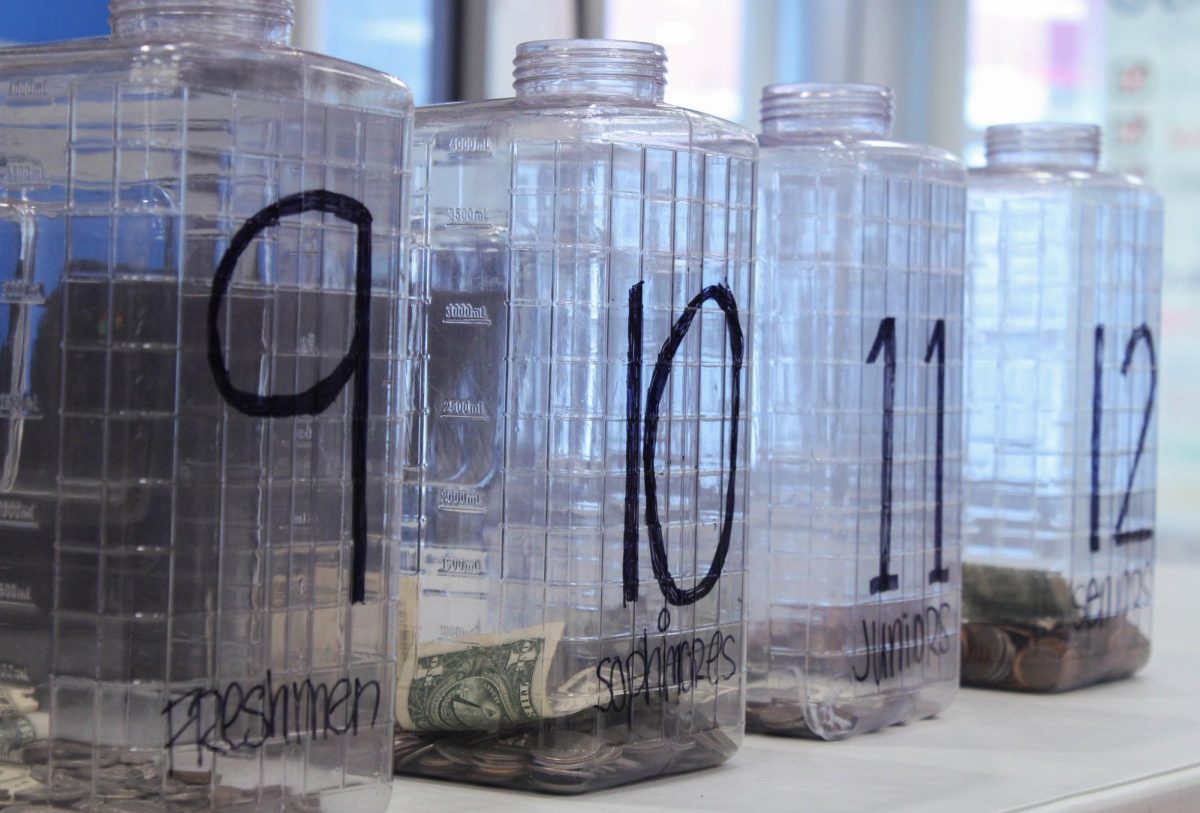
During the week of Feb. 6, students were encouragedto donate their pennies orcoins to Students for GenderEquality (SGE) during lunchoutside the school library. After collecting donationsthroughout the week, SGE raised $128. The senior class contributed the most coins and won this year’s Penny Wars competition. Prior to fundraising, they discussedseveral options before voting to donate the money to the Women’s Center of Lansing.
SGE co-president Maia Meghea (12), who has been a member of the club for three years, said the Women’sCenter was notable because of the direct support it provides.
“It stood out to us because they’re doing a lot of hands-on stuff,” Meghea said. “You can see the effects of what they’re doing.”
The Women’s Center of Lansing provides support services for women experiencing abuse including counseling and other resources. Meghea said Penny Wars has been a consistent tradition during her time in the club.
“It’s always been a thing,” Meghea said. “People brought in huge bags of pennies this year because they weren’t really using them anymore.”
Penny Wars originally began at ELHS through Amnesty International, but after it disbanded, SGE adopted the fundraiser around eight years ago. SGE advisor Kristen Pfaendter said the fundraiser was suggested by Bonnie McGraw, who previously advised Amnesty International before becoming involved with SGE.
“It’s a great fundraiser,” Pfaendter said. “It’s a fun way to have the rivalry between classes while keeping it respectful.”
To organize the fundraiser, SGE members created posters to advertise the event and took shifts monitoring the coin collection jars during lunch periods. Before the fundraiser took place, the club had to submit a request form detailing the dates of the event and how the money would be used. After the coins were collected, SGE members sorted them using a free coin-counting machine at MSUFCU before depositing the money through the school. Once the check is issued, several SGE members plan to deliverit to the Women’s Center of Lansing in person.
“It’s a good way for students to see their money used positively,” Pfaendter said. “Even a small amount can make a big impact.”