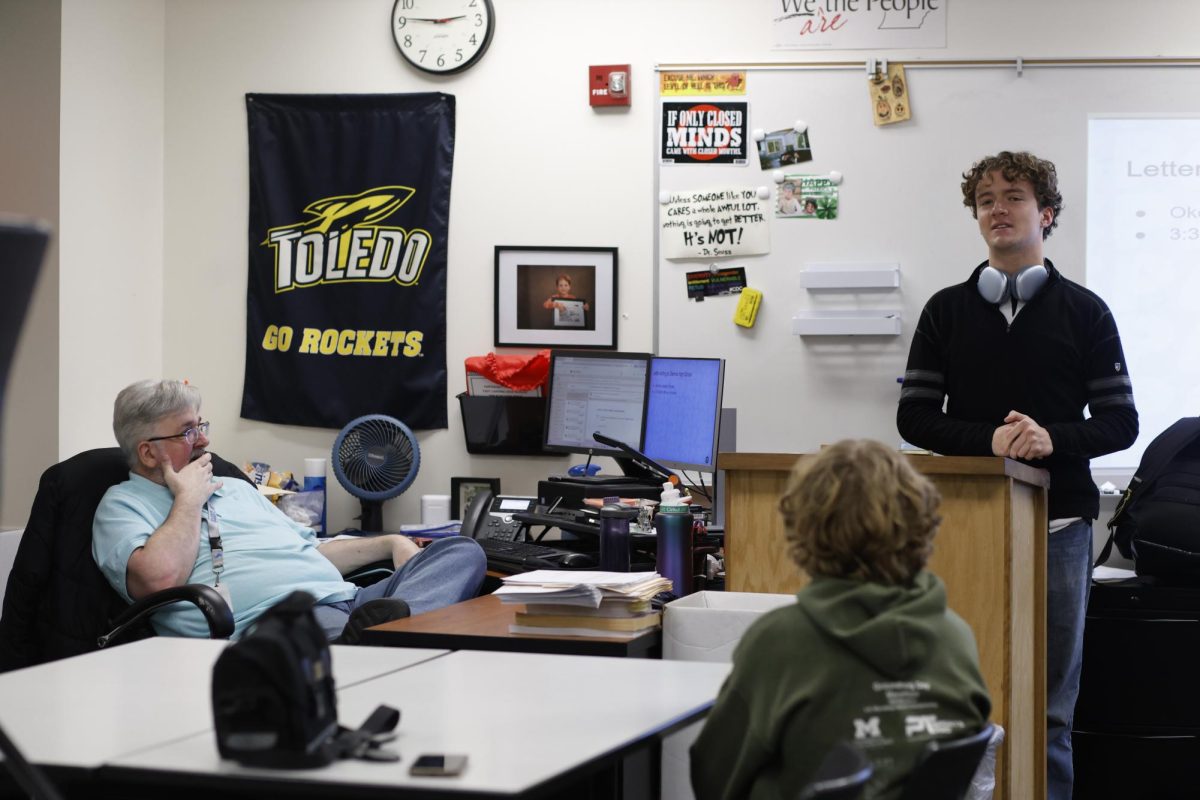



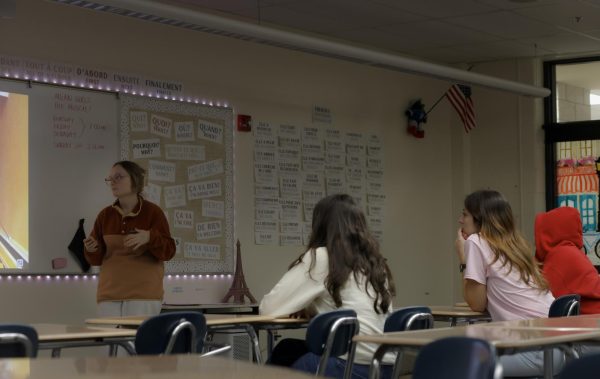
A shared interest in unexplained crimes and the psychology behind them brought Allison Drzal (12), Cielo Gutierrez (12) and Liliane Klotz (12) together to start True Crime Club their sophomore year. Since then, the club has met every Wednesday in French teacher Madame Christopoulos’ room. For many members, it isn’t just about the thousands of unsolved cases but what goes on behind the scenes and inside the minds of the culprits.
“It’s not just about the mystery—it’s about understanding people and why they do what they do,” Drzal said.
Meetings are structured similarly to a book club. Each week, a member presents a case— generally unanswered or recently reopened—and the group discusses it while watching related videos for context. While members sometimes view documentaries together, discussion remains central to the club’s experience.
“A lot of our cases are murder cases because we look at the psychological aspects of the killer,” Drzal said. “Obviously, we’re not going to actually solve them, but we try to walk through who could have done it and what was going on in their head.”
In its two years at ELHS, the club has attracted students interested in psychology, law and criminal justice.
“We have everyone—from forensics buffs to people who just want to understand how these cases happen,” Gutierrez said. “It’s become a space for open discussion and awareness.”
While the cases can be intense, the officers emphasize that the club is not about sensationalizing violence.
“There’s a fine line,” Gutierrez said. “These are people’s lives. For me, it’s education more than entertainment. Some of these stories are horrific, but they open our eyes, make us more aware of what can go wrong and highlight inequalities in the justice system.”
The club’s discussions center less on graphic details and more on personal stories and investigative breakthroughs.
“We focus on the lives of the victims and the process of solving the case—what it took, what went wrong and how law enforcement worked through it,” Drzal said.
Rather than centering conversations on the killers, the club encourages members to think about the lasting impact of crime.
“Learning about these cases is really eye-opening,” Drzal said. “It’s made me more aware—not just of the dangers, but also of the ways victims and their stories can slip through the cracks. It was their lives that were really changed.”