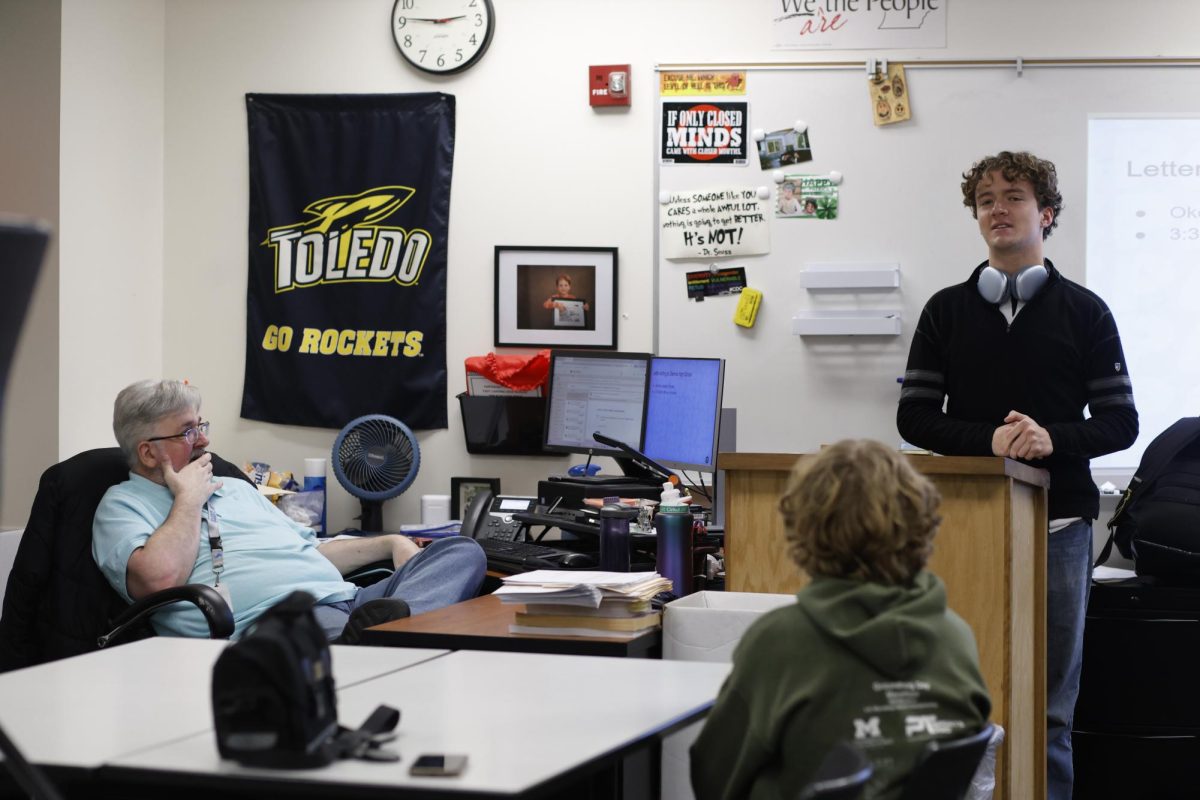


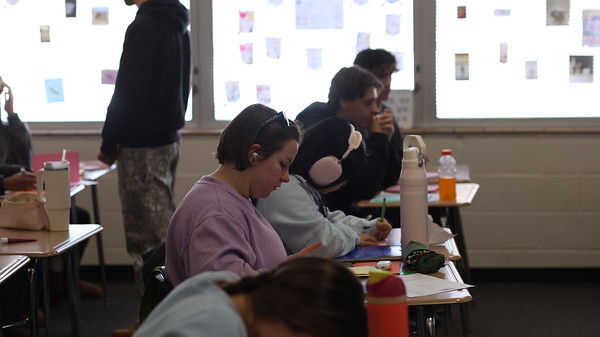
As the bell rings for sixth hour, Amy Sayers and her students gather their things. Although Sayers leads her 6th-hour class on Mondays, Wednesdays, and Thursdays, her schedule shifts on the remaining days.
“We attend all of the 6 elementary schools on Tuesdays and Fridays,” Sayers said. “My high school students do mentoring for elementary students during that time.”
Mentoring at the elementary schools is one of EL’s most meaningful traditions. For years, the course was simply known as Math Mentoring. But for the past eight years, students have been offering help with reading, spelling, writing and whatever else the elementary students need. One of these students is Farrah Hodkinson (12), who mentors kids at Red Cedar.
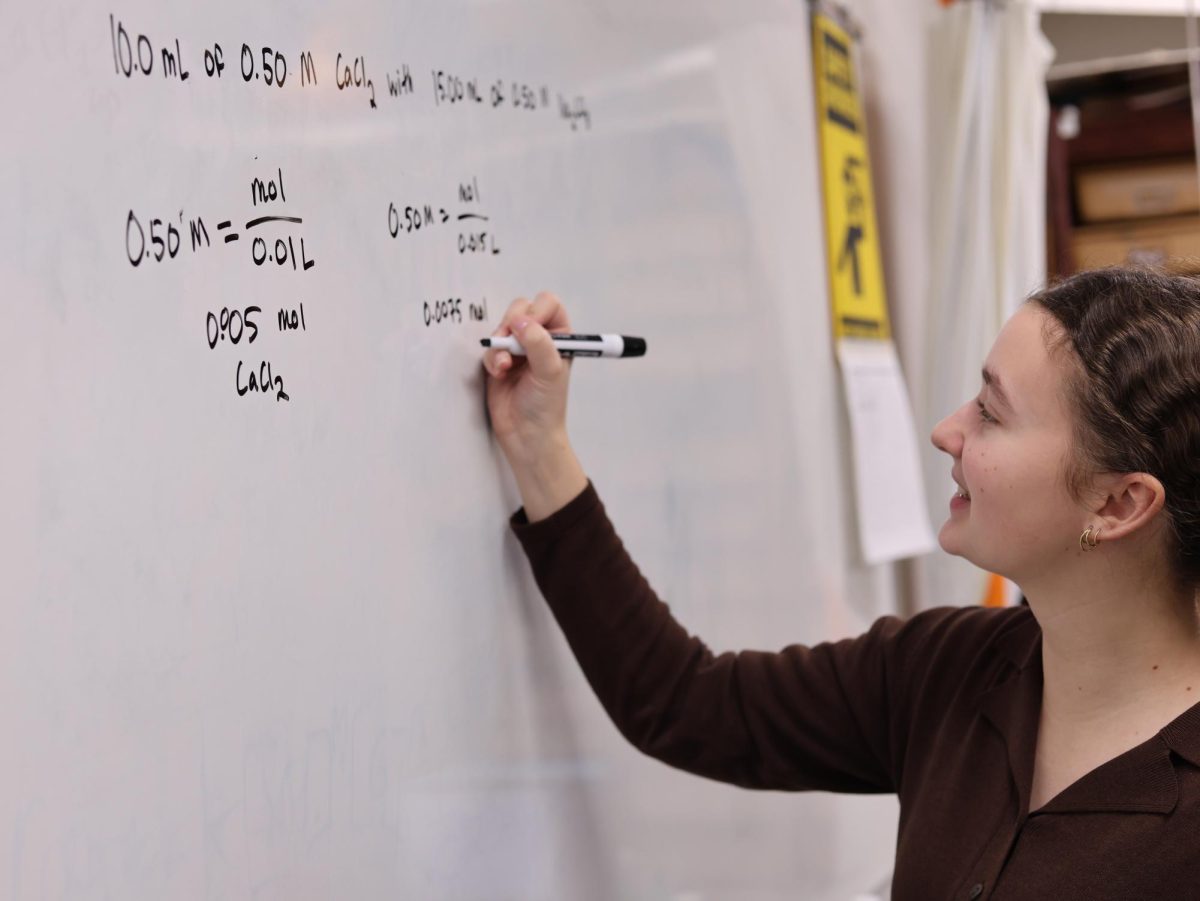
“I mainly specialize in fifth-grade math,” Hodkinson said. “It’s pretty fun for them, and I get to relearn all the math.”
This year, the class was renamed Jr. Trojan Mentoring due to how much the program has branched out over the years.
“My high school students [used to] go and mentor math with the elementary students at Whitehills,” Sayers said. “Now we’ve branched out to all six of the elementary schools. We also have a second-year program, Junior Trojan Mentoring 2, which is at MacDonald Middle School.”
Students who choose to take Jr. Trojan Mentoring 1 and 2 are given opportunities and more structure to potentially work towards a career in education.
“I want to teach elementary kids as a career, specifically special education,” Hodkinson said. “[This class] really gives me a purpose, and I love feeling a connection with the kids.”
To prepare mentors, Sayers dedicates classroom time to exploring how schools operate worldwide. Students watch documentaries, conduct research and complete projects to develop their mentoring skills. Each week, students are evaluated through journals in which they record their accomplishments at the elementary schools.
“This week, we watched a documentary series about what schools are like in other countries,” Sayers said. “We just watched [an episode] about a girl in a very rural area in India who ended up dropping out of school. They get to see what school is like around the world, and they can see different education systems than just the ones here in the United States.”
In this class, the responsibility that comes with representing ELHS is key. Attendance, maturity and teacher recommendations determine who qualifies for the program.
“I can’t send out students who have attendance issues or who aren’t mature enough to positively represent East Lansing,” Sayers said.
As the year goes on, both mentors and mentees are growing and changing for the better.
“I’ve made super strong relationships with the kids I mentor,” Hodkinson said. “It’s a really great class, and you get to walk away knowing that you made a positive impact on the kids’ lives.”