

On Feb. 10, students and staff gathered for the annual Multicultural Assembly, a celebration highlighting the school’s diverse cultures, traditions and identities. Through performances, music and storytelling, the event aims to promote understanding and unity.
The Multicultural Assembly has been an ongoing tradition for over 50 years. District Media Specialist Kathryn Kowalski, who organizes the event, believes it’s very important to continue providing students with opportunities to learn about one another beyond the classroom.
“I’ve been at this school for over 20 years, but this tradition has been going on for about 30 years before that,” Kowalski said. “The tradition lost its spark when the school shut down for COVID-19, but ever since, we’ve been trying to bring it back.”
Kowalski believes the assembly allows students to share their cultures in creative ways while helping others gain new perspectives. From dances and songs to spoken word and storytelling, each performance highlights unique traditions and experiences.
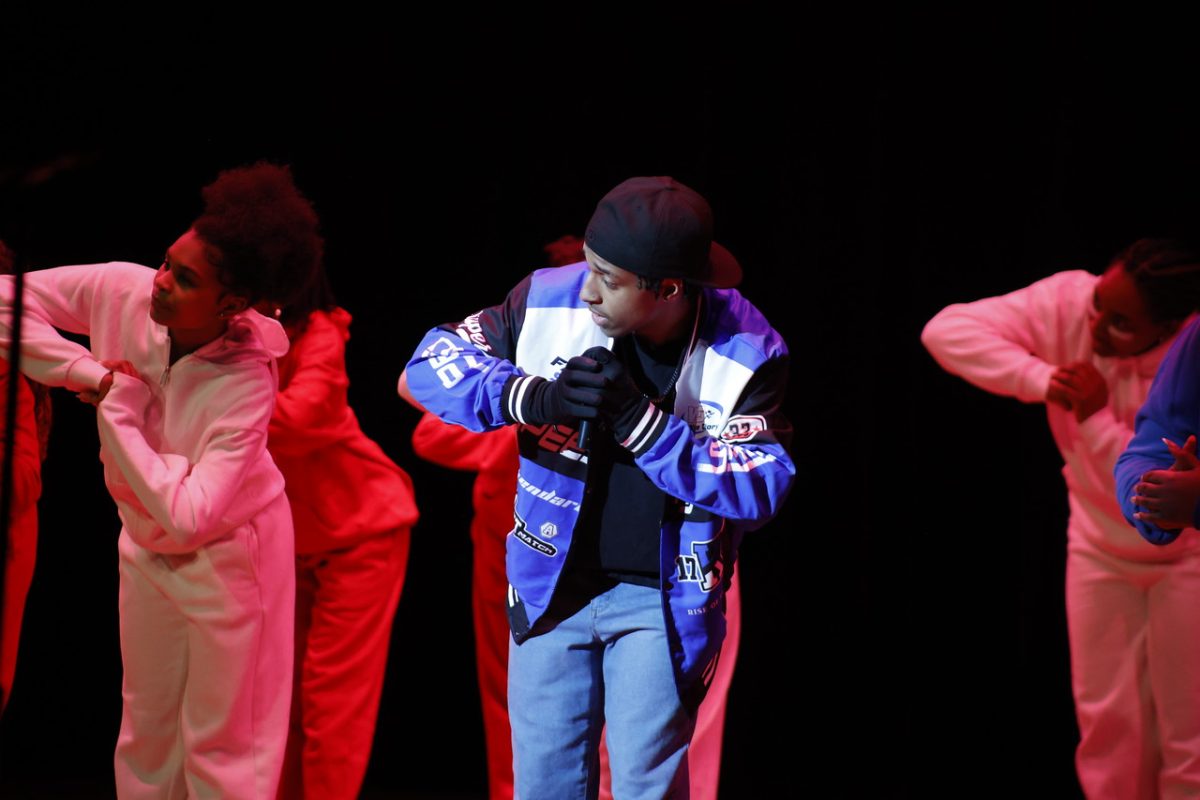
The spotlight performance this year was by the Black Student Union (BSU). During their act, they performed the Kendrick Lamar Super Bowl LIX halftime show. Ana Sztykiel (12), a member of BSU and the dance team, joined BSU because she wanted to bring awareness to the black community.
“Especially in times like today, it’s really important for us to come together and continue to spread light for our community,” Sztykiel said.
This year marked the first Multicultural Assembly performance for Daiden Lewis (11), who served as the lead singer and dancer in the role of Lamar.
“It was definitely nerve-racking being in front of so many people, but once the music started, it felt exciting and empowering,” Lewis said. “[The assembly] can help give details of past history that is very important that is not taught during school.”
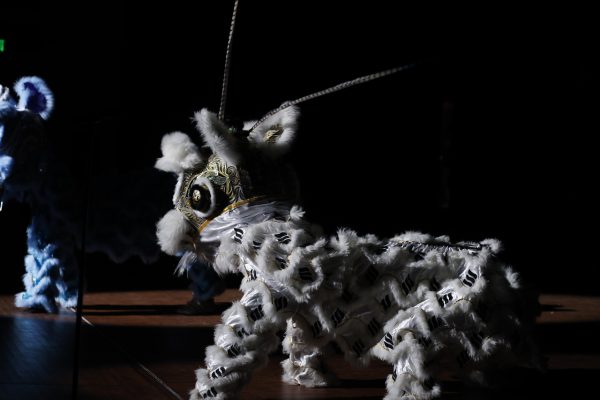
Following the BSU performance, the assembly continued with a traditional lion dance that brought another cultural tradition to the stage.
The lion dance performance was done by a group of students outside of school through an organization who specializes in traditional cultural performances.
A common misconception surrounding the performance is that the lion is mistaken for a dragon. While both are important symbols in Chinese culture, lion dancing and dragon dancing are different traditions, each with their own history, movements and meaning. The lion dance is typically performed by two people working together inside the costume, while the dragon dance involves a longer figure controlled by multiple performers.
Ben Lu (11), who’s participating in the assembly for his second year, feels that the distinction between the two being known is important.
“When people mix [the dances] up, they don’t understand the actual meaning behind it,” Lu said. “The dance of the lion represents the warning of evil spirits in Chinese culture.”
Sammy Kang (9), another performer in the lion dance, finds the Multicultural Assembly important for the student body.
“A lot of people from different cultures go to school here,” Kang said. “It’s important that they feel seen.”
Both performers hope students walked away with a better understanding of the lion dance and appreciation for the dedication behind the performance.
“I wish more people knew how much hard work we put into this,” Lu said.
In addition to cultural performances, the assembly also featured a fashion show that celebrated student identity and diversity. Students walked the stage wearing traditional clothing that reflected their heritage, allowing the audience to learn more about different cultures through fashion and personal expression.
Cierra Alaniz (12) has participated in the multicultural assembly every year, making this year’s fashion show, as her last, especially meaningful. In past assemblies, Alaniz performed a dance and helped showcase traditional dresses of Latinx culture. This year, she took part in the fashion show by wearing her quinceanera dress.
“A lot of people of different cultures don’t wanna express themselves, but everyone is unique in their own way,” Alaniz said.
Alaniz encouraged more students to take part in the tradition.
“More people need to stop being scared and just do it,” Alaniz said.
Like Alaniz, Maricela Perez (12) also represented her culture by walking the stage in her quinceañera dress. Perez was excited to have the opportunity to showcase her dress one last time after participating once before during her sophomore year.
“It’s fun being with all the other girls with their dresses,” Perez said. “You can be around people who are similar to you.”
Perez explained that events like the Multicultural Assembly play an important role in education, especially for students at a young age. Perez noted that many schools focus primarily on white culture in history classes, which can limit students’ understanding of the world around them.
“American people are not the only people who made history,” Perez said. “It’s important to learn about other cultures, especially in school when you’re young.”
Music performances allowed students to participate—even if they weren’t representing a specific culture. Ezra Wadland (10) found performing helped students connect.
“It helps us understand each other better,” Wadland said.
Liam Preisser (12), played with a small jazz group and had an equally intimidating and rewarding experience.
“It’s scary being on stage, but it’s really cool seeing everyone come together and share their cultures,” Preisser said. “It makes people feel like they belong.”
According to Zail Roberts (10), another band performer, the assembly gave students a rare opportunity to perform in front of the school community.
“There aren’t many chances to play in front of everyone,” Roberts said. “It’s a good way to showcase different talents and cultures.”
After returning from the COVID shutdown, participation in the Multicultural Assembly was limited. However, William Severin (12) decided to change that. He brought back the Walk of Flags, a tradition that allows students to represent their cultural backgrounds by carrying their countries’ flags across the stage.
Severin, president of the Danish Club, wanted a meaningful way to showcase Danish representation and felt the Walk of Flags was an easy and inclusive way for students to express their identities.
“Everyone has their own background,” Severin said. “It’s really cool to recognize where everyone came from.”
Student Congress helps fund the flags, making it possible for students from many backgrounds to participate. Severin has walked with the Danish flag the past few years and planned to do so again this year.
“It’s a nice way to show identities and remind people that our school community is made up of so many different cultures,” Severin said.
Lana Lu (11), who participated in the Walk of Flags for the first time, felt nervous but also excited about the opportunity.
“It was nerve-wracking because I was scared of messing up or tripping on stage,” Lana said.
Lana represented China and decided to participate after noticing fewer students involved last year.
“Last year nobody really did it,” Lana said. “So I was like, ‘I’m going to step up and do it.’”
Lana feels that celebrating different cultures in school helps students better understand one another.
“Everyone gets a little taste of different cultures,” Lana said.