

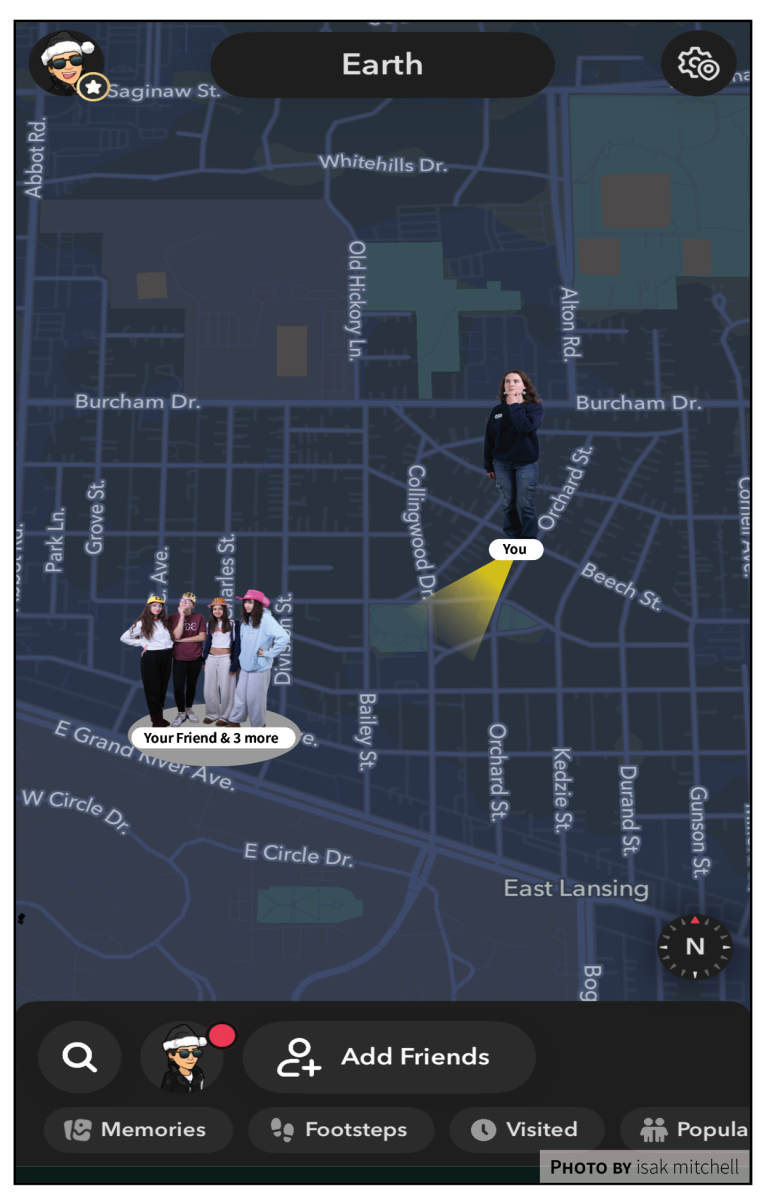
Everyday, we see that they roll out of bed in a cozy, two-story home on Bailey Street to a screeching alarm.
At 7:20 a.m., they tumble into their car. We know that they pull onto Grand River, headed to Starbucks for their daily fix—going a little too fast.
Drink in hand, we see them swerve onto Gunson then Burcham—running late. They have to park in the far lot.
After trudging through the snow to door eight, we know they make their way to the opposite end of the school—the science wing.
We see that they have Economics next, followed by Ceramics.
At lunch, we know they’ll be at Bell’s, grabbing a large slice with pepperoni spilling off the sides. They only pay half price—it’s a Wednesday.
Their routine isn’t something we ever talk about. We don’t even have to ask.
Instead, their Bitmoji tells us.
Or profile.
Or pin.
As we mindlessly zoom in and out of the maps on our phone screens, we feed more fuel to the fire of an ever-growing epidemic:
Loneliness.
According to the World Health Organization, “between 17–21 percent of individuals aged 13–29 reported feeling lonely, with the highest rates among teenagers.”
Staring at these pixels, we make our best effort to dig ourselves out of isolation.
But this is all just a trick on our minds—a placebo—to placate ourselves for the time being.
In a poll done by Civic Science, “among adults who have felt lonely, 46 percent reported sharing their location with someone, compared to 31 percent of those who hadn’t felt much—if any— loneliness at all.”
As a result, more of us become stalkers than you’d think.
Through apps like Life360, Find My Friends and Snapchat, one can see the shared locations of both those known and unknown with the click of a button.
To 60 percent of our editorial board, this ability is simply invasive.
There’s clearly a desire to know what everyone is doing at all times. As Jennifer King, the Privacy and Data Policy Fellow at Stanford University puts it in an Axios article, it’s a “form of compassion.”
By having access to the locations of those in our community, we inherently feel more connected to them. It’s like we’re in this little bubble contained in the maps on our screens, the proximity of our characters strengthening our real-life relationships to each other.
That connection feels even stronger if the software automatically groups you together.
However, this desire can be dangerous.
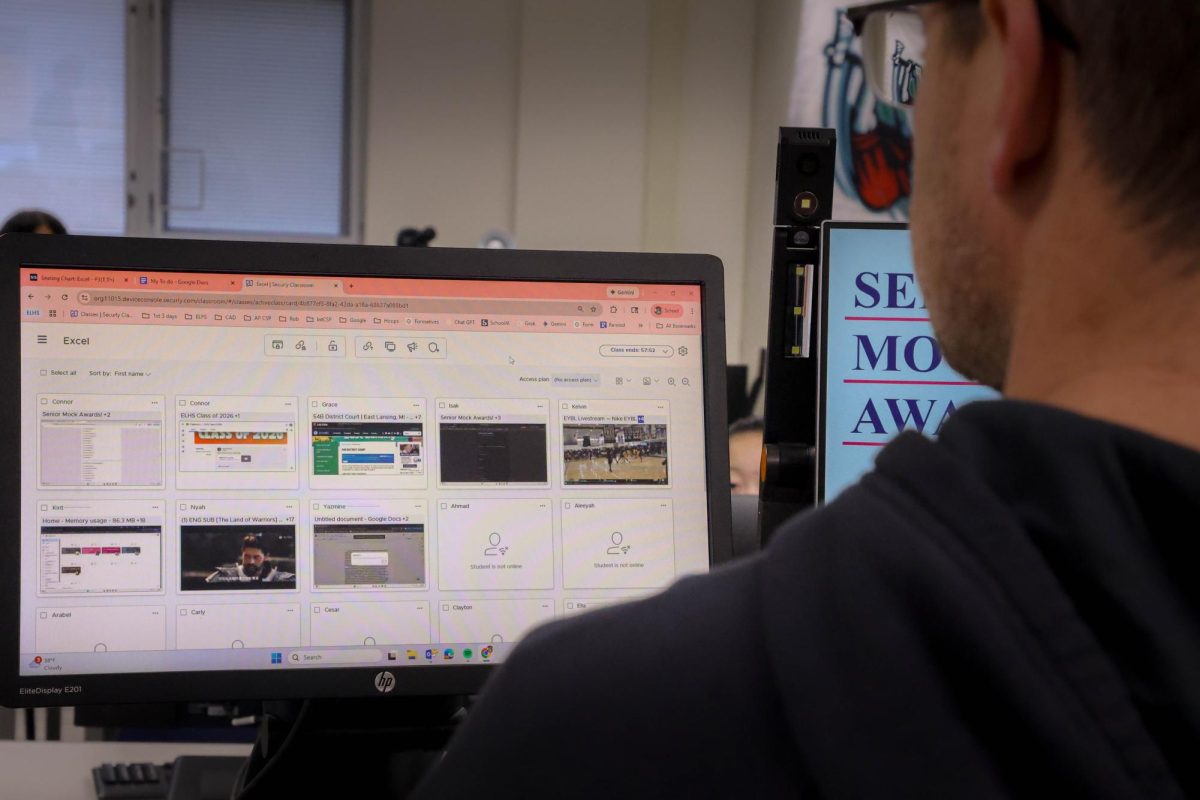
By becoming a fly on the wall in our day-by-day lives, we don’t bestow each other the privacy we deserve to have. Because something—or someone—is always watching.
As we see the characters of our friends group together, our minds start to become rife with FOMO and doubt. We feel as isolated as our profile stood separate from the others—singled out.
And for those on the other side of the screen, having their location turned on becomes a burden. Even if we just had solo plans with ourselves or a quick sweet treat run to catch up with an old friend, we worry that we’re being noninclusive of our friends privy to our location.
So we slide on ghost mode for an hour, hoping no one bats an eye at the loss of our location. But no one should have to feel this obligation.
Instead, we need to recognize that these overwhelming feelings of solitude are often not deliberately caused by the people on our screens: it’s our own minds assuming the worst.
Because in these moments that make us appear alone, we truly aren’t.
Whether it be calling a friend you miss, emailing an old coach or even just taking a few steps into the room next to yours to talk to a parent, there is always someone there for you to connect to.
The proximity of you and your friends’ Bitmojis isn’t a reflection of how strong your relationships are with each other.
It’s really just a cartoon on your screen.